
I Think, Therefore I Err
Errors by athletes, CEOs, doctors, you, me, and even groups of people can result in reduced human performance with adverse consequences. Whether fleeting or habitual, miscues are caused by, and a marker of, reduced brain health—and are preventable.
Dr. Philip Maffetone
Errers are everywhere. We love blaming other people, pets, or animate objects for our mistakes. It was the other guy’s fault, the dog ate my homework, that last martini. But the fact is, the brain is to blame—and it’s no accident.
Human errors occur from failing to properly perform a sequence of brain-body actions intended to achieve a different outcome. The exceptions may be those attributed to forces of nature or by chance, statistically; like a softball-sized meteor crashing through a driving car’s roof. But don’t blame God or mathematics.
Our brain is obviously essential for optimal physical and mental performance. Its error monitoring system constantly evaluates and detects physical and mental activities, adjusts behavior, and learns to prevent previous and potentially imminent mistakes.
When aware, we may laugh at our silly mistakes, and be embarrassed by serious ones. But being unaware of a miscue may be a big red flag—such as not knowing a mistake was made or refusing to believe it happened. This can indicate cognitive and behavioral impairment associated with poor learning, depression, or mental fatigue. Unawareness of worsening errors can also be an early indication of late stage cognitive conditions such as Alzheimer’s and other neurological or psychiatric diseases.
Poor error monitoring may be accompanied by reduced focus, slower reaction times, and the production of more serious mistakes.
This inability of the brain to effectively monitor itself makes us more error-prone. Whether momentary lapses or long-term dysfunction, a less-healthy brain brings more blunders. These measurable impairments are called human performance deficiency.
Errors can also be triggered by physical, chemical, and or mental stress. A healthy brain protects itself by sensing, monitoring, and adapting to all stress, reducing the potential for mistakes.
Among the powerful brain stressors is food.
Food Factors
While virtually all nutrients are necessary for a healthy brain, certain food choices can rapidly and significantly impair the brain, not unlike alcohol. As alcohol affects our chemical messengers (neurotransmitters), food can impair blood sugar, reducing brain energy. Both impair performance similarly.
Studies show that low blood sugar, hypoglycemia, can quickly reduce brain health leading to errors. This can even occur in healthy people, adversely affecting the brain’s attention, visual, and auditory areas, and the speed of information processing. The result can be slower reaction times, sleepiness, poor mood, depression, and anxiety.
This can obviously affect driving motorized vehicles.
While breathalyzers reflect blood alcohol, they may soon also test a driver’s impaired blood sugar, which can be a more common cause of vehicular crashes.
Note: False positives can occur when measuring the breath for alcohol, as accompanying ketones in those with diabetes or healthy ketosis can be misinterpreted as alcohol.
Low blood sugar is often caused by skipping meals and or consuming refined carbohydrates, including sugar.
Poor food choices → Low blood sugar → Brain-body fatigue → Errors
Other reasons for brain mistakes can include:
- Prescription, over-the-counter, and recreational drugs, and even very small amounts of alcohol.
- Driving distractions like texting, and talking on the phone or with passengers, may be as big a risk as alcohol or other drugs.
- Sleepiness, fatigue, or brain fog for other reasons any time of day.
Crashes are No Accident
Once called accidents, the better term crashes removes the random blame and encourages a proactive approach to address the causes. Over 90% of auto crashes are due to human error. Overall, the rising rates of crashes continue despite improved road and vehicle safety. In addition, walkers, runners, cyclists, and other pedestrians with reduced brain function can contribute to vehicular mishaps.
The notion that no one is at fault is a farce.
Age plays a role too. The rapidly growing older population of drivers includes those with chronic disease, which further increases the risk of errors. However, the highest risk category remains those 16-20 years young due to the brain’s limited driving experience combined with undeveloped behavior and emotion.
Yet, a better brain can still help everyone, at any age, drive and function more safely.
Ranges of Errors
The spectrum of brain farts runs from common and often funny minor mishaps, like an actual sign announcing a Pubic Event, to the tens of trillions of dollars lost annually due to human error, now considered the cost of doing business (costs passed on to consumers). And, of course, the more serious ones related to the horrors of daily life and death.
Purposeful miscues are often created for effect in art, especially humor. Consider William Shakespeare’s The Comedy of Errors, Paul Simon’s 50 Ways to Leave Your Lover, and Haydn's String Quartet nicknamed The Joke.
Errors can also serve as a natural and important part of learning and innovation. So some are not failures, nor is punishment an effective way to avoid a recurrence or from making others.
Baseball great Derek Jeter recently addressed college graduates about failure as a way to excel. “I failed miserably. There were days I literally cried because I was so bad. My first season as a professional, I made 56 errors. For non-baseball fans, that’s hard to do intentionally,” Jeter said, as the crowd burst into laughter. “And that’s also not funny.”
Perhaps the most common error by athletes are last moment modifications. Here’s an example I’ve seen in professionals and amateurs alike: After rationally planning an important event ahead of time, you senselessly change things at the last moment. This includes food choices, footwear, too much intensity early in the event, or others. These are made emotionally, from peer pressure, lack of confidence, or other reasons usually leading to reduced performance and disappointment.
Herd Err
Herd mentality can breed errors when two or more are gathered together. Even whole systems like healthcare. Over 50% of complications occurring during major surgeries in the US suggest over 400,000 potentially preventable adverse events.
Reported prevalence of other errors include over 60% of all those in the home, 70-80% in aviation, and up to 85% in aerospace.
Sometimes, seemingly benign behavioral changes in working groups that appear normal can slowly evolve to tragedy. These complex layered mistakes can be discovered with enough effort: Analysis of the Challenger disaster was traced back to people and events over the previous nine years.
Herein lies a powerful self-therapy. By mentally backtracking the path of an error, we can help the brain discover what went wrong, learn from it, and prevent future problems.
Two potent indicators of reduced brain health that raises error risk include: Excess body fat, which can physically shrink the brain and reduce its function, and as noted above, consuming sugar and other refined carbohydrates, which impairs the brain directly and is a primary cause of excess body fat.
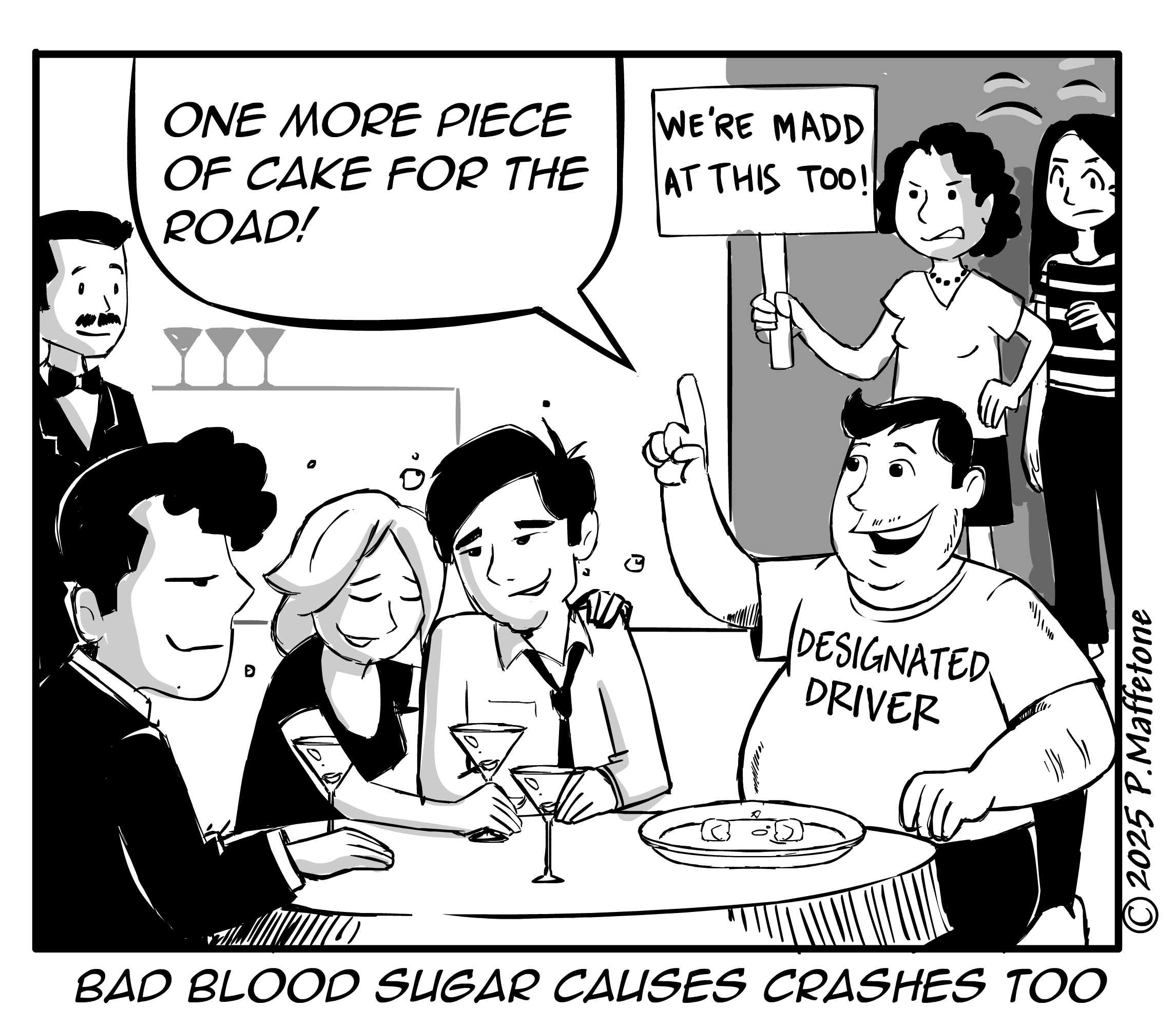
So if you’re a designated driver, don’t be madd when told to steer clear of the sweets.
**