
You Can’t Out-Run the Holidays
Making a (stress) list… checking it twice? A realistic guide to managing burnout this season: Make your own dang list!
Dr. Phil Maffetone
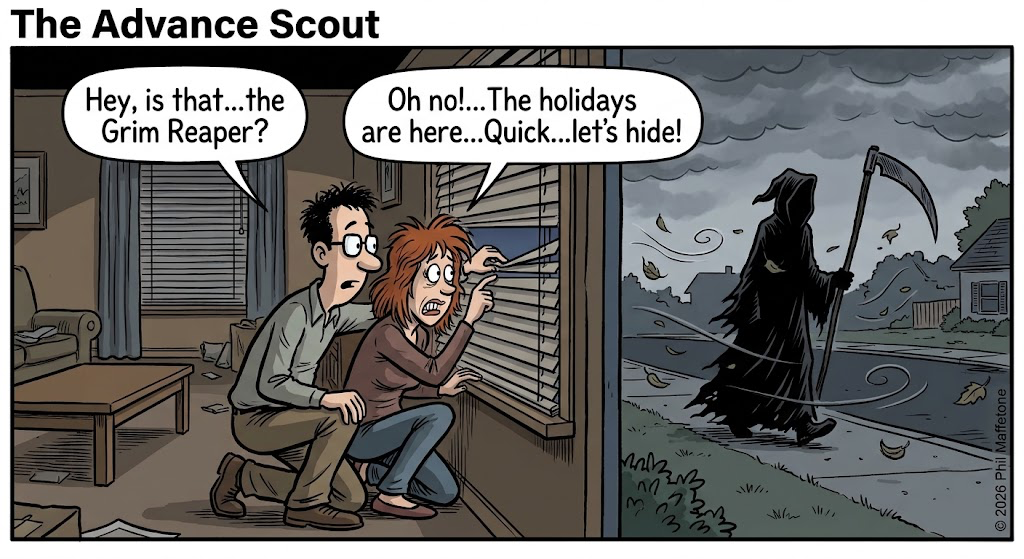
Halloween marks the gateway to the holiday season. My simple cartoon serves up a timeless reminder of the ultimate prescription for holiday stress: Avoid it!
The Science of Santa
While served up in a festive wrapper, this breakdown highlights the clinical reality behind peak holiday pressure—what we might diagnose as Sick Santa Syndrome. Strip away the sleigh bells, and the jolly icon transforms into a satirical yet technically precise health hazard:
-
Myth: Santa comes from the North Pole.
-
Fact: Santa comes courtesy of propaganda, corporate greed, and hyper-commercialism designed to weaponize consumer spending.
-
Fact: Santa comes courtesy of propaganda, corporate greed, and hyper-commercialism designed to weaponize consumer spending.
-
Myth: Santa spreads joy and happiness.
-
Fact: He exhibits a severe cardiometabolic disorder, models toxic physical and mental habits, and serves as a superspreader for seasonal germs.
-
Fact: He exhibits a severe cardiometabolic disorder, models toxic physical and mental habits, and serves as a superspreader for seasonal germs.
-
Myth: Santa is exclusively for children.
-
Fact: He actively conditions them into lifelong behavioral patterns of excess.
-
Fact: He actively conditions them into lifelong behavioral patterns of excess.
-
Myth: Santa holds divine or demonic judgment via his “list.”
-
Fact: Santa isn't even a recognized saint—he’s a well-marketed fairy tale.
-
Fact: Santa isn't even a recognized saint—he’s a well-marketed fairy tale.
-
Myth: Santa checks his list twice.
-
Fact: He’s just auditing your impulse-buying capabilities.
-
Fact: He’s just auditing your impulse-buying capabilities.
Taming the Chaos
Managing the daily barrage of cortisol is non-negotiable if you want to stay fit and functional. This stressful time impairs immunity making it flu season and is also the peak of heart attacks. Outsmarting holiday stress starts with personalization. While total immunity to stress is a myth, mastery over it is not. Seeing your triggers dragged out of your subconscious and onto paper (or a glowing screen) is the first step toward prevention and self-preservation.
Here is my time-tested, clinically pragmatic approach: Build your Stress List.
Step 1: Categorize Your Chaos
Establish three distinct buckets and spend a few days logging your triggers in real-time:
- Physical: Excessive sitting, postural distress, or swinging wildly between overtraining and total dormancy.
- Biochemical: Dietary landmines—refined carbs, sugar spikes, caffeine dependency, and a liquid-catered social calendar.
- Mental-Emotional: Strained family dynamics, toxic environments, and information overload.
Step 2: Prioritize and Attack
Rank each category to isolate the apex predator. Focus on neutering one primary stressor at a time. Leave tactical reminders where you can't ignore them.
Step 3: Draw the Line
- Check off what you control: Actively target items you can modify—such as raiding the cookie tin, over-caffeinating, or skipping your workouts.
- Cross out what you can’t: Strike a definitive line through variables completely outside your jurisdiction (like bad weather or a dysfunctional corporate hierarchy). Stop burning metabolic fuel on what you can't fix today. Virtually any chronic stressor can eventually be altered—whether that means changing careers or moving to a different climate when you are ready.
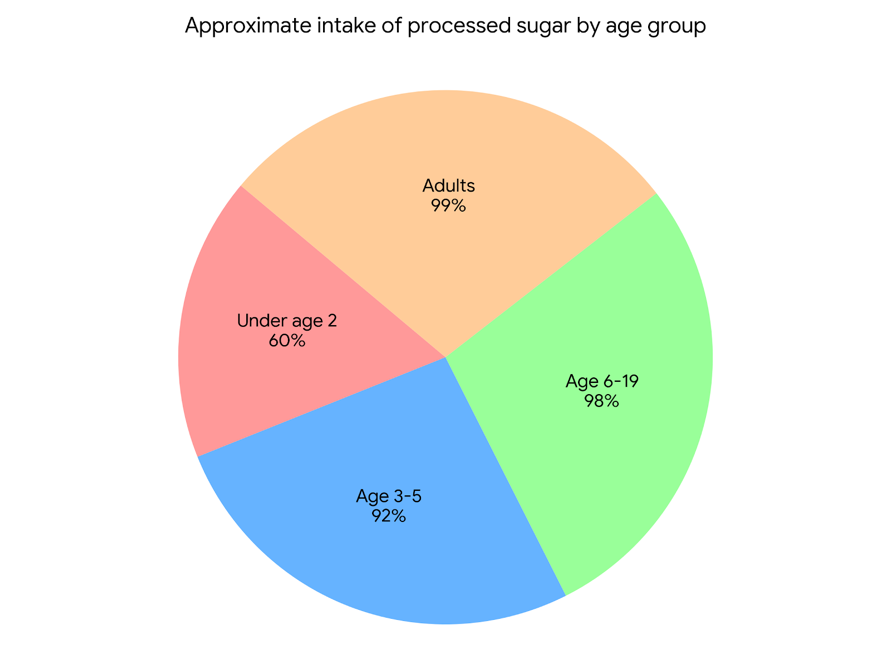
Among the season's chief biochemical saboteurs are refined carbohydrates. To illustrate, I engineered a pie chart—for amusement—reflecting baseline year-round intake, keeping in mind that volumes naturally swell when the holidays hit.
Strategies to Say “No” to Stress
- Say the word “No”: Master it. Stop auditioning for martyrdom by agreeing to obligations you despise.
- Stay in the present: Cease the mental gymnastics of replaying the past or catastrophizing the future.
- Step away from the ledge: Re-boot your neural network as needed each day with a mandatory five-minute cognitive pause.
- Swap the news for music you love: Mute the outrage-industrial complex playing on your screens and radios.
- Share your thoughts: Vent to a trusted colleague or confidant before your internal pressure valve blows.
-
Start your morning with joy: Before your bare feet hit the floor, ask yourself: “What piece of genuine amusement do I have engineered for today?”
The Recovery Imperative
Unchecked stress is a direct assault on recovery. Spiked cortisol levels obliterate your sleep architecture, leaving you staring at the ceiling at 2:00 AM, wondering why your body refuses to channel that anxious electrical current into tomorrow's fatigue.
Nothing says ‘Happy New Year’ quite like a pulled hamstring—you can't outrun holiday stress, but you can definitely run yourself into an injury, or worse. People try to exorcise weeks of bingeing with a sudden fitness crusade, only to shock an already exhausted body and add fresh trauma to their metabolic hangover.
While stress is an absolute certainty of modern life, your vulnerability to it is optional. By taking a ruthless inventory of what’s wearing you down, you grant your physiology the breathing room required to recover, adapt, and actually enjoy being alive more than ever.
**